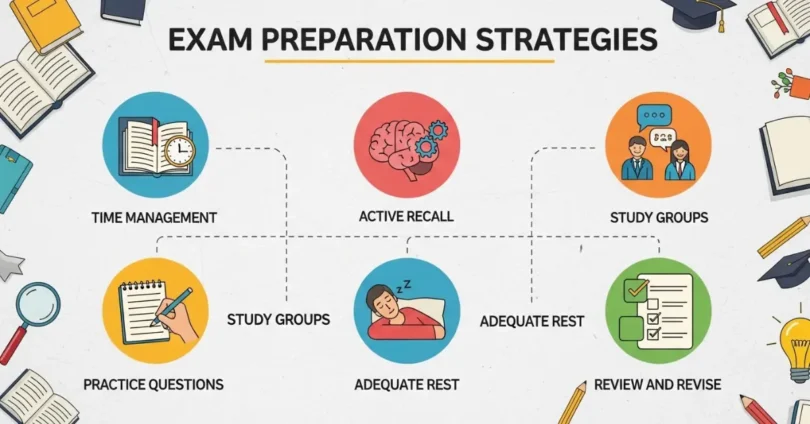
Exam time is one of the most important periods in a student’s life. Good performance in exams depends on how well a student prepares before the test. Many students study hard but still do not get good marks because they do not use the right method. This is where Exam Preparation Strategies become very important. These strategies help students study in a smart, organized, and stress free way so they can remember more and perform better in exams.
Understanding Exam Preparation Strategies
Exam Preparation Strategies mean the smart ways and methods used by students to prepare for exams effectively. Instead of just reading books again and again, students plan their study time, use proper techniques, and focus on important topics. These strategies help in improving memory, concentration, and confidence.
Good exam preparation is not about last minute study. It is about regular practice, proper planning, and understanding concepts clearly.
Importance of Exam Preparation Strategies
Using proper Exam Preparation Strategies is important for every student. Without a plan, students often feel confused and stressed. With a good strategy, study becomes easy and more effective.
Some key benefits include:
- Better understanding of subjects
- Less exam stress and fear
- Improved memory and focus
- Higher chances of good grades
- Better time management skills
When students follow a smart method, they do not need to study for long hours, but they still get better results.
Setting Clear Study Goals
The first step in Exam Preparation Strategies is setting clear goals. A student must know what they want to achieve.
For example:
- Finish one chapter in one day
- Revise math formulas daily
- Practice past papers every week
Clear goals help students stay focused and motivated. Without goals, students waste time and lose direction.
Creating a Study Plan
A study plan is very important for exam success. A proper plan divides time for each subject so that everything is covered before exams.
Steps to create a good plan:
- Make a daily timetable
- Give more time to difficult subjects
- Include short breaks between study sessions
- Revise old topics regularly
A study plan helps students stay organized and reduces last minute pressure.
Organizing Study Material
One of the best Exam Preparation Strategies is keeping study material organized. If books, notes, and papers are scattered, students waste time finding them.
Tips for organization:
- Keep separate notebooks for each subject
- Highlight important points in notes
- Arrange books on a study table properly
- Keep past papers in one folder
When everything is organized, study becomes faster and easier.
Creating a Focused Study Environment
A quiet and clean place is very important for studying. Noise and distractions reduce concentration.
Good study environment tips:
- Study in a quiet room
- Turn off mobile notifications
- Use a proper desk and chair
- Keep only study materials on the table
A peaceful environment helps the brain focus better and learn faster.
Time Management for Exams
Time management is one of the most powerful Exam Preparation Strategies. Many students fail not because they do not study, but because they do not manage time properly.
Simple time management tips:
- Study at fixed times daily
- Do not waste time on social media
- Use a timer while studying
- Prioritize important topics first
Managing time helps students complete their syllabus before exams and reduces stress.
Writing Effective Study Notes
Good notes make revision easier. Instead of reading full books again, students can revise short notes.
How to write good notes:
- Use simple language
- Write only important points
- Use bullet points for clarity
- Highlight key formulas and definitions
Good notes save time and improve memory during revision.
Active Learning Techniques
Active learning is a smart part of Exam Preparation Strategies. It means learning by doing, not just reading.
Examples of active learning:
- Solving questions instead of just reading answers
- Teaching someone else
- Making mind maps
- Asking questions while studying
Active learning helps students understand topics deeply and remember them longer.
Practice with Past Papers
Practicing past exam papers is very important. It helps students understand exam patterns and question styles.
Benefits of past paper practice:
- Improves speed and accuracy
- Builds confidence
- Helps identify important topics
- Reduces exam fear
Students should solve at least 3 to 5 past papers before exams.
Mock Tests for Better Preparation
Mock tests are like real exams. They help students check their preparation level.
Tips for mock tests:
- Set a timer like real exams
- Do not use notes while solving
- Check mistakes after finishing
- Try to improve weak areas
Mock tests are a strong part of Exam Preparation Strategies because they prepare students mentally.
Managing Exam Stress
Stress is common during exams, but too much stress can reduce performance. Students must stay calm and relaxed.
Ways to reduce stress:
- Take short breaks while studying
- Sleep properly every night
- Do light exercise or walking
- Stay positive and confident
A calm mind always performs better in exams.
Healthy Routine for Students
A healthy body helps a healthy mind. Students should follow a proper daily routine during exam preparation.
Healthy habits include:
- Eating fresh and healthy food
- Drinking enough water
- Sleeping at least 7 to 8 hours
- Avoiding junk food and late night study
Good health improves concentration and memory power.
Common Mistakes Students Should Avoid
Many students make mistakes during exam preparation which reduce their marks.
Common mistakes:
- Studying without a plan
- Last minute cramming
- Ignoring difficult subjects
- Not revising regularly
- Too much distraction from mobile phones
Avoiding these mistakes improves exam performance greatly.
Final Day Exam Preparation Tips
The last day before exams is very important. Students should not start new topics at this time.
Final day tips:
- Revise only important points
- Sleep early at night
- Keep all exam materials ready
- Stay calm and confident
A peaceful mind helps students perform better in the exam hall.
Common FAQs About Exam Preparation Strategies
Faqs of Exam Preparation Strategies:
What are Exam Preparation Strategies?
Exam Preparation Strategies are smart methods used by students to study effectively and score better marks.
Why are Exam Preparation Strategies important?
They help students stay organized, reduce stress, and improve exam performance.
How can I start preparing for exams?
Start by making a study plan, setting goals, and collecting all study materials.
What is the best time to study?
Early morning or quiet evening time is best for focused study.
How many hours should I study daily?
4 to 6 focused hours with breaks are usually enough for good preparation.
Are past papers useful?
Yes, they help understand exam patterns and improve practice.
How can I reduce exam stress?
Take breaks, sleep well, and stay positive during preparation.
What is the best way to revise?
Short notes and bullet points are best for quick revision.
Should I study new topics before exams?
No, only revise already studied topics before exams.
How can I improve memory for exams?
Regular revision, practice, and active learning improve memory power.
Conclusion
Exam Preparation Strategies are very important for every student who wants to achieve success in exams. Good preparation is not about studying all day, but about studying in a smart and planned way. When students set goals, manage time, take notes, practice past papers, and stay healthy, they can easily improve their performance.
Following the right strategies reduces stress, builds confidence, and helps students score higher marks. If students apply these methods regularly, exams will no longer feel difficult, but become an opportunity to show their knowledge and skills.